The 3D models and textures listed here come from open sources. Each one is shown with who made it, its licence, and what we changed so it runs well on a phone.
Biology
17 yo Female, Normal Heart
M.T. Bramlet and B.S. Cross · NIH 3D, entry 3DPX-002636
Licence: Public domain
Bramlet, M.T., Cross, B.S. (2016). 17 yo Female, Normal Heart. Resource document. NIH 3D Print Exchange.
What we changed: The whole heart (ALM0006_Whole.stl): decimated to the triangle count given below, smooth normals, centred, millimetres to metres, then quantised and meshopt-compressed into a GLB.
The file we serve: bio-heart-whole.glb, 49,854 triangles in 1 part, 322 KB.
17 yo Female, Normal Heart (sliced sagittally)
slarochelle0769, a remix of the heart by M.T. Bramlet and B.S. Cross · NIH 3D, entry 3DPX-007207
Licence: Public domain
17 yo Female, Normal Heart (sliced sagittally), by slarochelle0769 (NIH 3D 3DPX-007207), a remix of Bramlet, M.T., Cross, B.S. (2016). 17 yo Female, Normal Heart. NIH 3D Print Exchange.
What we changed: The two halves (heart_pt1 and heart_pt2) kept as separate parts, heart_half_1 (the back) and heart_half_2 (the front), centred together; decimated to the triangle count given below, smooth normals, millimetres to metres, then quantised and meshopt-compressed into a GLB. The source has no separate chambers: the cut shows them.
The file we serve: bio-heart-chambers.glb, 55,872 triangles in 2 parts, 358 KB.
3D Reference Organ for Lung, Male v1.3
Kristen Browne and Heidi Schlehlein, Human Reference Atlas (HuBMAP) · Human Reference Atlas 3D Reference Object Library
Licence: CC BY 4.0
Kristen Browne; Heidi Schlehlein. 2023. 3D Reference Organ for Lung, Male v1.3. https://doi.org/10.48539/HBM737.FFBT.876 (CC BY 4.0)
What we changed: Every part kept as its own node by its atlas name (the lung segments, hila and intrapulmonary bronchi); parts over 2,500 triangles decimated, from 224,765 triangles in all to the count given below; vertex colours, tangents and UVs dropped; smooth normals; quantised and meshopt-compressed GLB. This version of the atlas lung has no trachea and no main bronchi: those are two separate files in the same body frame.
The file we serve: bio-lungs-bronchial.glb, 57,901 triangles in 58 parts, 510 KB.
3D Reference Organ for Trachea, Male v1.0
Kristen Browne and Heidi Schlehlein, Human Reference Atlas (HuBMAP) · NIH 3D, entry 3DPX-021021
Licence: CC BY 4.0
Kristen Browne; Heidi Schlehlein. 2023. 3D Reference Organ for Trachea, Male v1.0. https://doi.org/10.48539/HBM969.WCCJ.636 (CC BY 4.0)
What we changed: The three parts kept as nodes (trachea, tracheal cartilage, carina); not decimated; tangents and UVs dropped; smooth normals; quantised and meshopt-compressed GLB. It ends at the carina, where the two main bronchi begin: they are a separate file in the same body frame, which joins it to the lung.
The file we serve: bio-trachea.glb, 44,042 triangles in 3 parts, 274 KB.
3D Reference Organ for Main Bronchus, Male v1.1
Kristen Browne and Heidi Schlehlein, Human Reference Atlas (HuBMAP) · Human Reference Atlas 3D Reference Object Library
Licence: CC BY 4.0
Browne, Kristen, and Heidi Schlehlein. 2024. "3D Reference Organ for Main Bronchus, Male v1.1." https://doi.org/10.48539/HBM373.XHXV.928 (CC BY 4.0)
What we changed: The four parts kept as nodes by their atlas names (the left and right main bronchi and the cartilage of each); not decimated; tangents and UVs dropped; smooth normals; quantised and meshopt-compressed GLB. In the same body frame as the trachea and the lung: each main bronchus runs from the carina to its lung's lobar bronchi, so the three files make one airway.
The file we serve: bio-main-bronchi.glb, 6,023 triangles in 4 parts, 48 KB.
BodyParts3D 4.0: diaphragm, sternum, ribs and costal cartilages
The Database Center for Life Science (DBCLS) · BodyParts3D, in the LSDB Archive
Licence: CC BY 4.0
BodyParts3D, © The Database Center for Life Science licensed under CC Attribution 4.0 International
What we changed: Each structure kept as a node named as the database names it: the diaphragm, the sternum (manubrium, body and xiphoid process joined), 24 ribs and 14 costal cartilages; parts over 2,500 triangles decimated to the triangle count given below in all; smooth normals; millimetres to metres, stood up in y, centred on the rib cage; quantised and meshopt-compressed GLB. No spine: the ribs end at the back where the vertebrae would be.
The file we serve: bio-diaphragm-ribcage.glb, 57,970 triangles in 40 parts, 429 KB.
BodyParts3D 4.0: skin (head and trunk)
The Database Center for Life Science (DBCLS) · BodyParts3D, in the LSDB Archive
Licence: CC BY 4.0
BodyParts3D, © The Database Center for Life Science licensed under CC Attribution 4.0 International
What we changed: The skin (FMA7163, one part) cut off at the hips, about 93 cm above the soles, so it keeps the head, the trunk and the upper arms, and no legs, hands or genitals: a see-through ghost around the organs. Then decimated to the triangle count given below; smooth normals; millimetres to metres, stood up in y and centred on the same point as the rib cage above, so the two fit together; quantised and meshopt-compressed GLB.
The file we serve: bio-body-shell.glb, 30,000 triangles in 1 part, 189 KB.
Physics
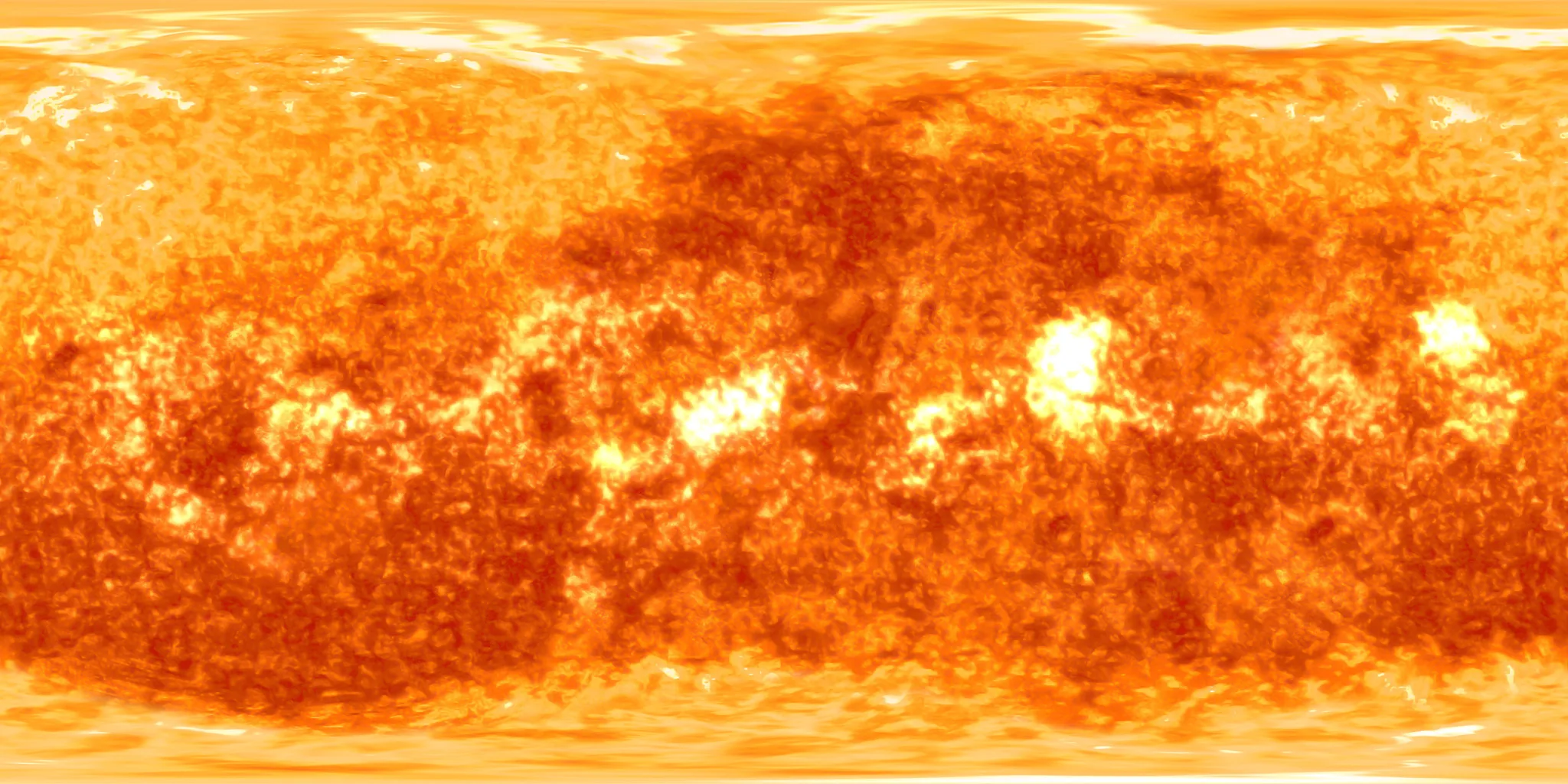
Sun texture (2k_sun.jpg)
Solar System Scope · Solar System Scope textures
Licence: CC BY 4.0
Sun texture by Solar System Scope (www.solarsystemscope.com/textures), CC BY 4.0
What we changed: Converted to WebP at 2048 x 1024.
Note: Its maker says the colours in this set are slightly more saturated than in true-colour photos, and that gaps in the planets' mapping are filled with invented terrain that matches the rest.
The file we serve: phys-tex-sun.webp, 2048 x 1024 pixels, 219 KB.
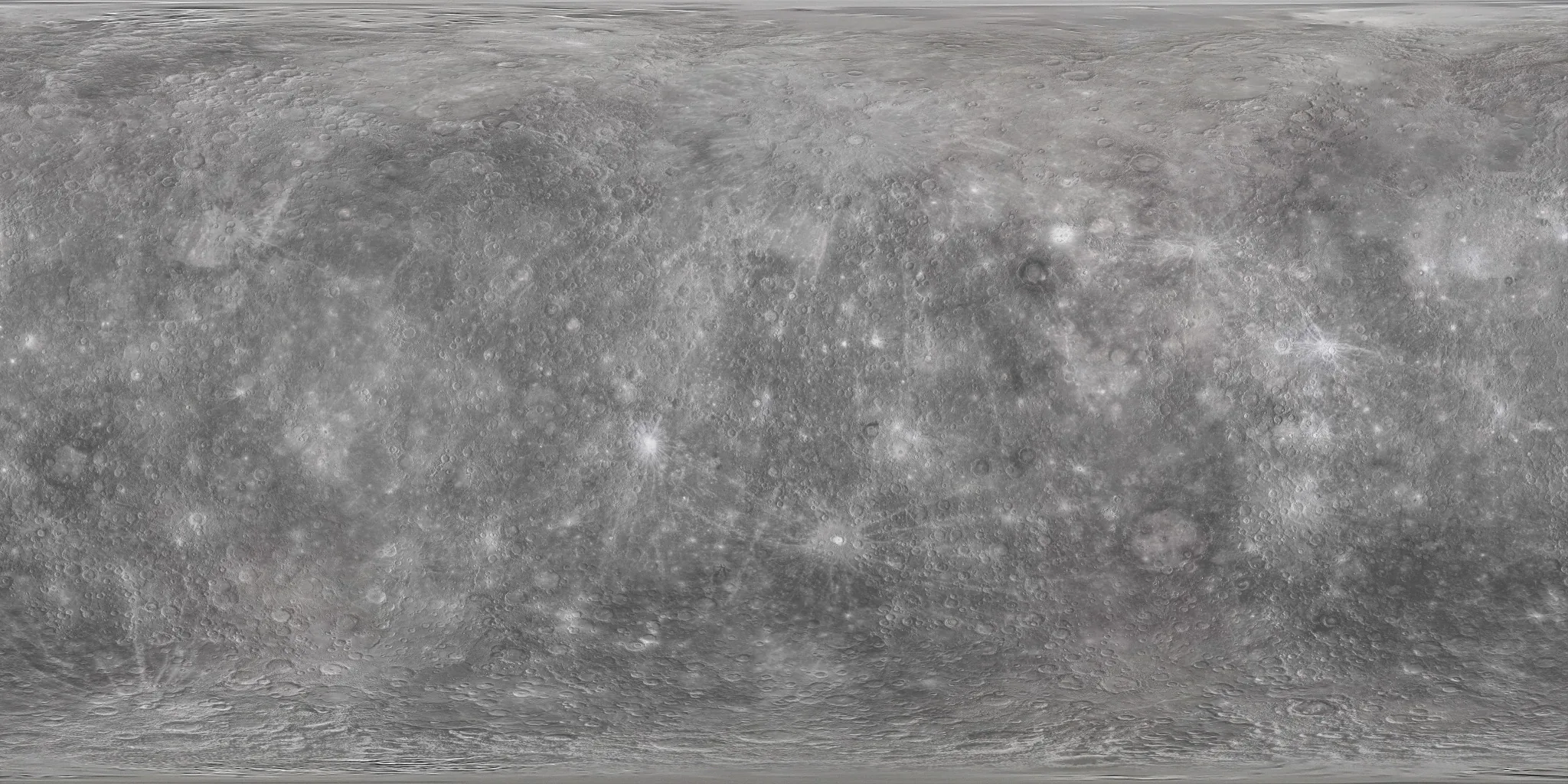
Mercury texture (2k_mercury.jpg)
Solar System Scope · Solar System Scope textures
Licence: CC BY 4.0
Mercury texture by Solar System Scope (www.solarsystemscope.com/textures), CC BY 4.0
What we changed: Converted to WebP at 2048 x 1024.
Note: Its maker says the colours in this set are slightly more saturated than in true-colour photos, and that gaps in the planets' mapping are filled with invented terrain that matches the rest.
The file we serve: phys-tex-mercury.webp, 2048 x 1024 pixels, 406 KB.
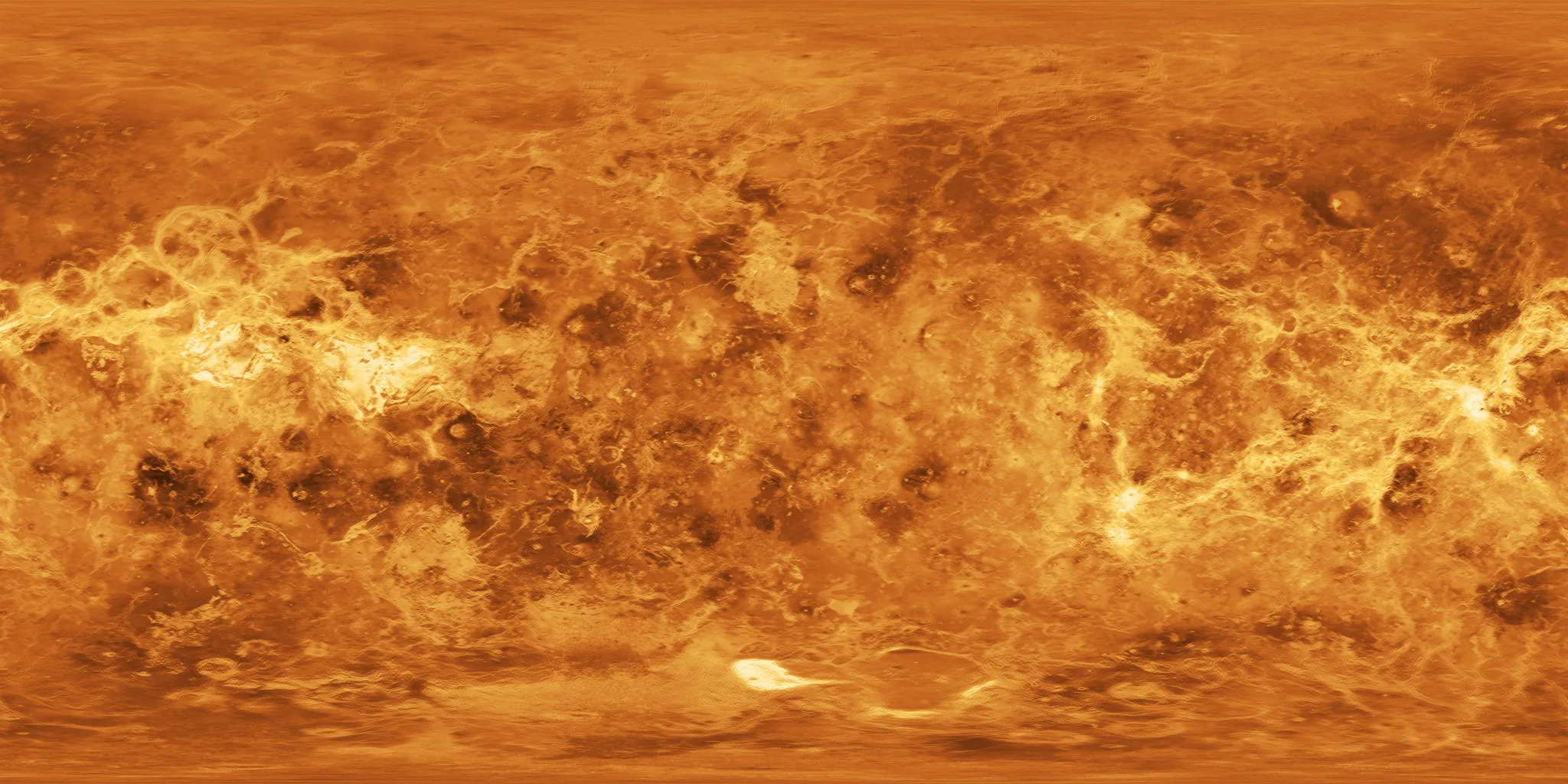
Venus surface texture (2k_venus_surface.jpg)
Solar System Scope · Solar System Scope textures
Licence: CC BY 4.0
Venus surface texture by Solar System Scope (www.solarsystemscope.com/textures), CC BY 4.0
What we changed: Converted to WebP at 2048 x 1024.
Note: Its maker says the colours in this set are slightly more saturated than in true-colour photos, and that gaps in the planets' mapping are filled with invented terrain that matches the rest.
The file we serve: phys-tex-venus-surf.webp, 2048 x 1024 pixels, 287 KB.
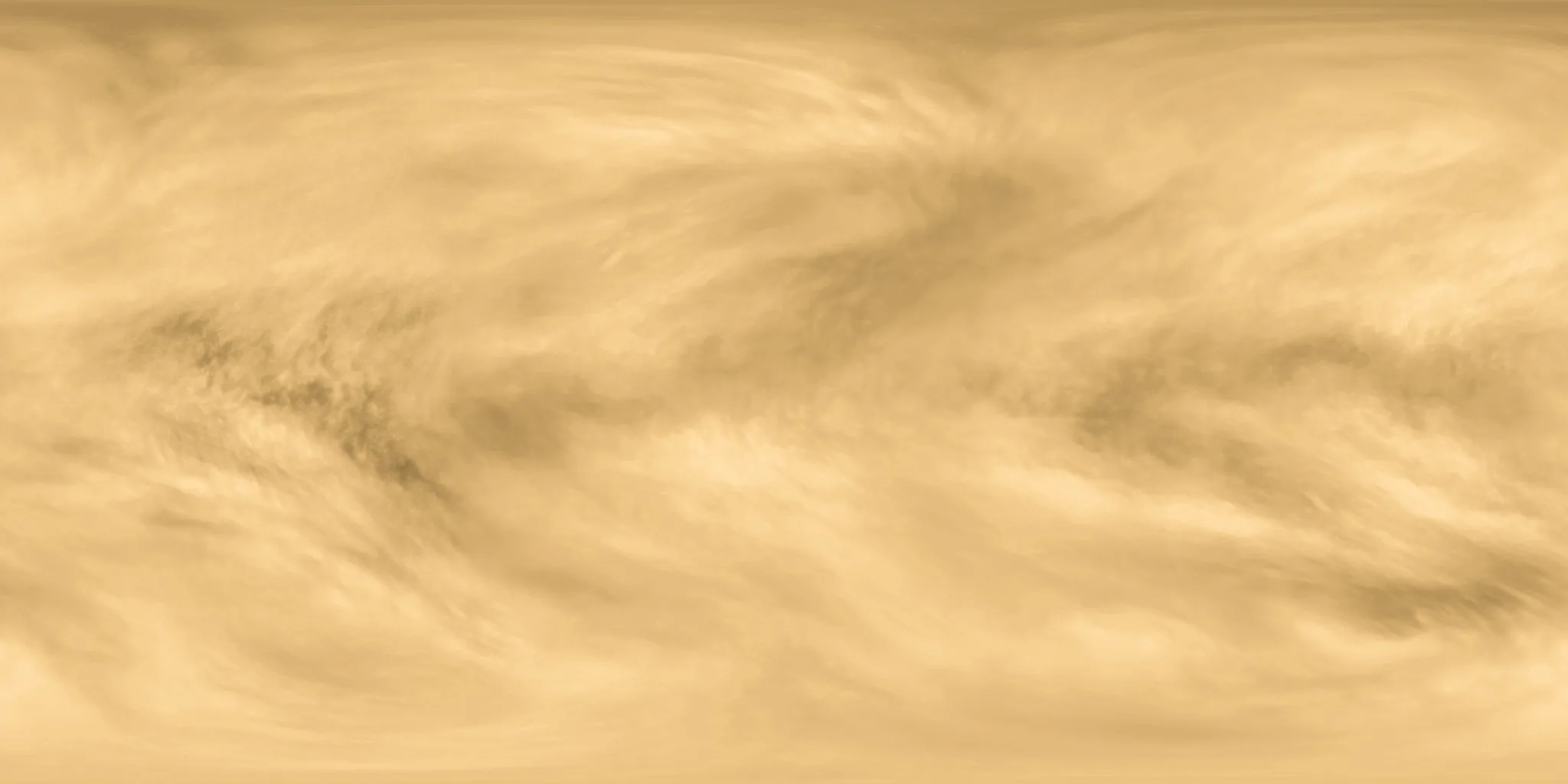
Venus atmosphere texture (2k_venus_atmosphere.jpg)
Solar System Scope · Solar System Scope textures
Licence: CC BY 4.0
Venus atmosphere texture by Solar System Scope (www.solarsystemscope.com/textures), CC BY 4.0
What we changed: Converted to WebP at 2048 x 1024.
Note: Its maker says the colours in this set are slightly more saturated than in true-colour photos, and that gaps in the planets' mapping are filled with invented terrain that matches the rest.
The file we serve: phys-tex-venus-atmo.webp, 2048 x 1024 pixels, 34 KB.
Earth normal map (2k_earth_normal_map.tif)
Solar System Scope · Solar System Scope textures
Licence: CC BY 4.0
Earth normal map by Solar System Scope (www.solarsystemscope.com/textures), CC BY 4.0
What we changed: Converted from TIFF to lossless WebP at 2048 x 1024: every value kept. A data map: read it linearly, not as colour. Its relief is faint: 96% of its pixels sit within 4 steps of flat, out of 255.
The file we serve: phys-tex-earth-normal.webp, 2048 x 1024 pixels, 300 KB.
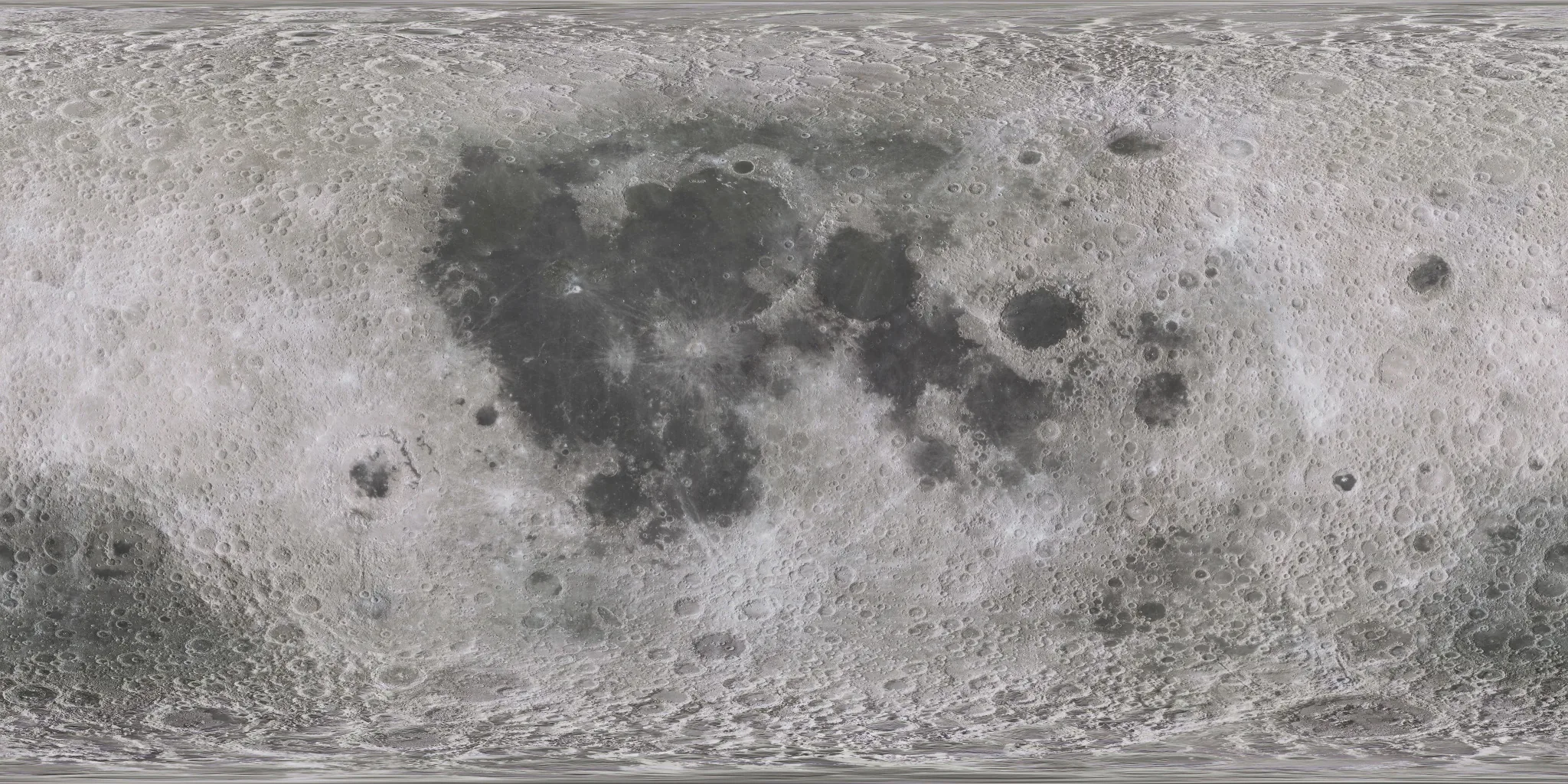
Moon texture (2k_moon.jpg)
Solar System Scope · Solar System Scope textures
Licence: CC BY 4.0
Moon texture by Solar System Scope (www.solarsystemscope.com/textures), CC BY 4.0
What we changed: Converted to WebP at 2048 x 1024.
Note: Its maker says the colours in this set are slightly more saturated than in true-colour photos, and that gaps in the planets' mapping are filled with invented terrain that matches the rest.
The file we serve: phys-tex-moon.webp, 2048 x 1024 pixels, 530 KB.
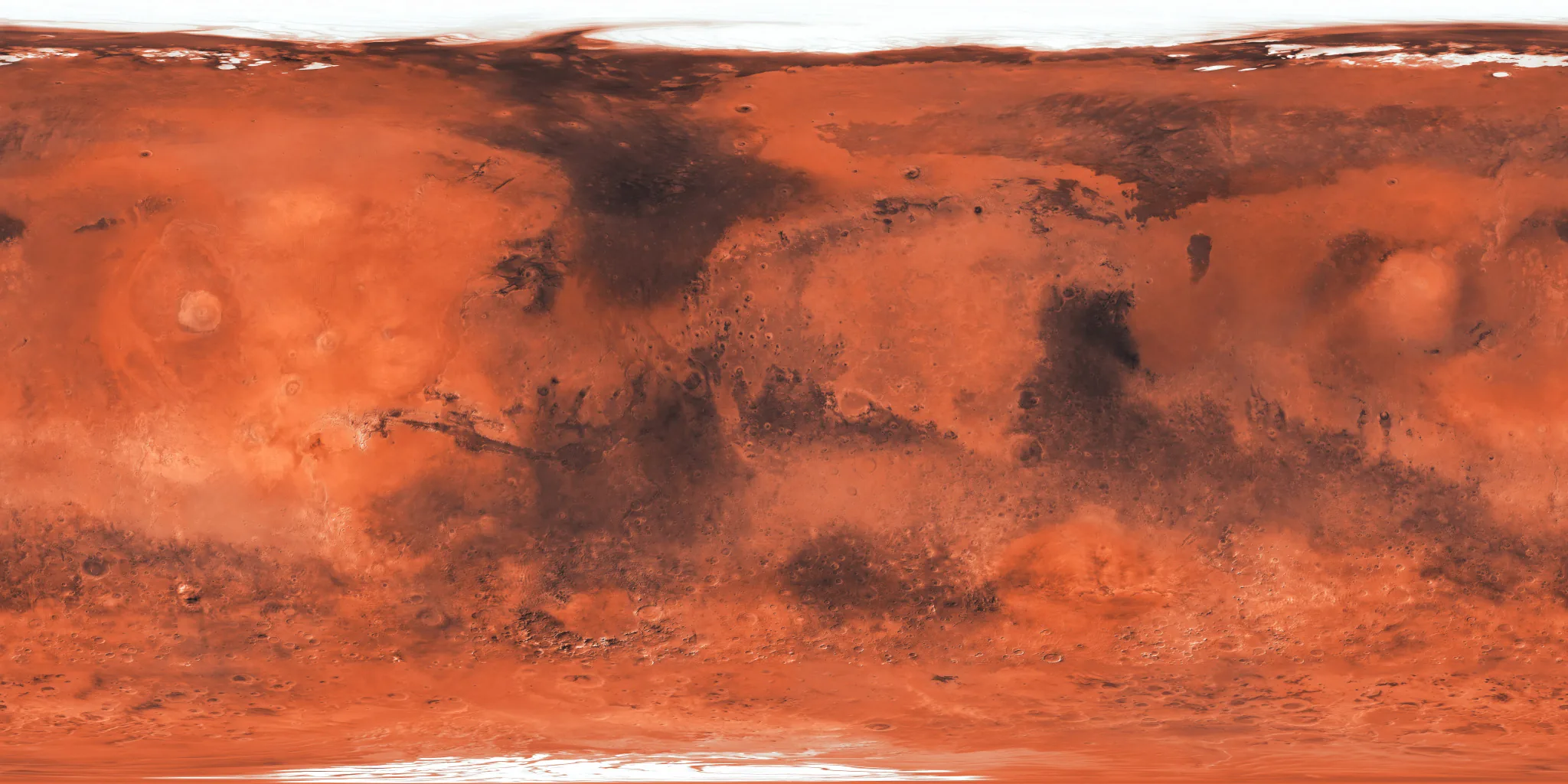
Mars texture (2k_mars.jpg)
Solar System Scope · Solar System Scope textures
Licence: CC BY 4.0
Mars texture by Solar System Scope (www.solarsystemscope.com/textures), CC BY 4.0
What we changed: Converted to WebP at 2048 x 1024.
Note: Its maker says the colours in this set are slightly more saturated than in true-colour photos, and that gaps in the planets' mapping are filled with invented terrain that matches the rest.
The file we serve: phys-tex-mars.webp, 2048 x 1024 pixels, 200 KB.
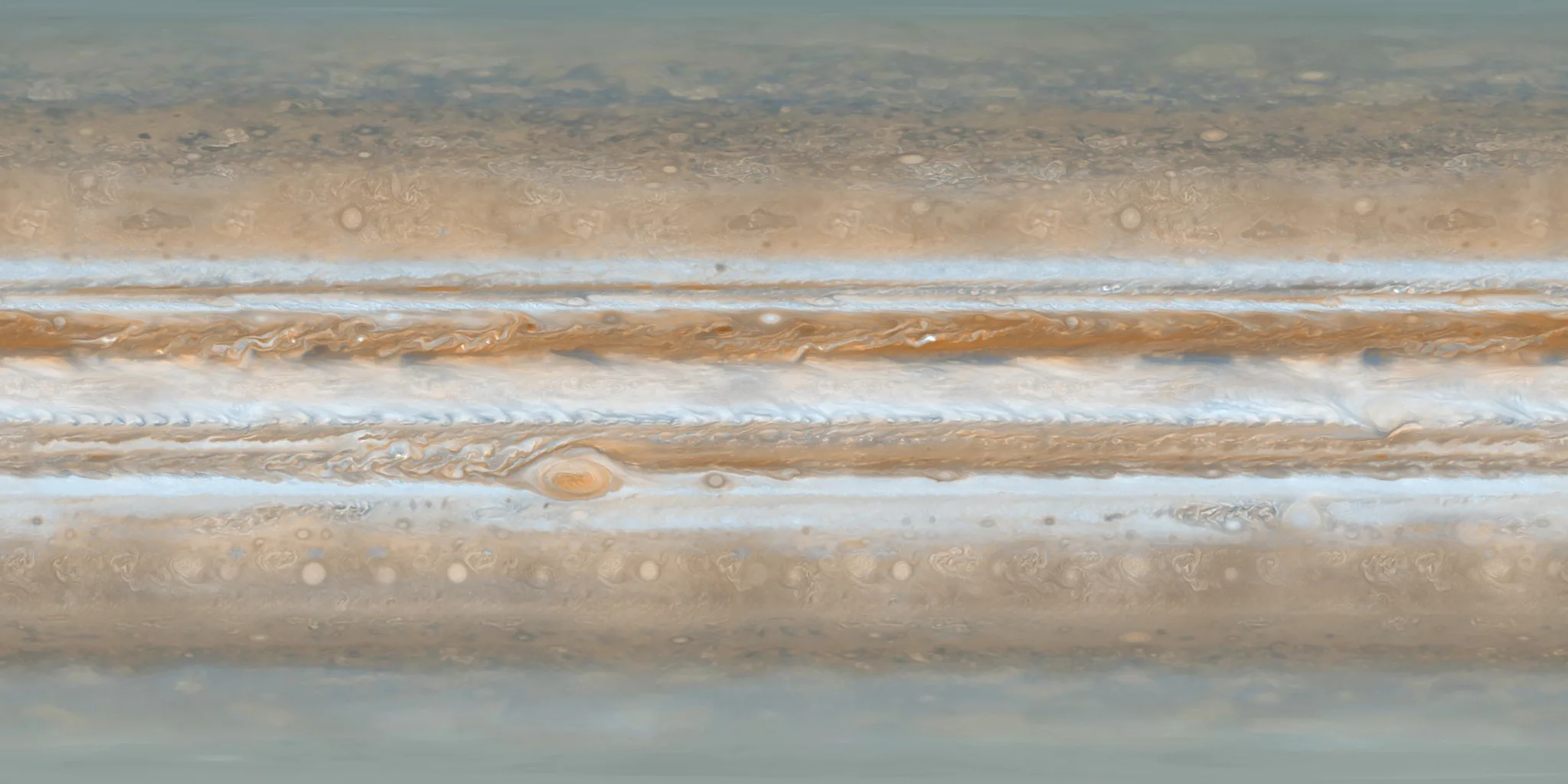
Jupiter texture (2k_jupiter.jpg)
Solar System Scope · Solar System Scope textures
Licence: CC BY 4.0
Jupiter texture by Solar System Scope (www.solarsystemscope.com/textures), CC BY 4.0
What we changed: Converted to WebP at 2048 x 1024.
Note: Its maker says the colours in this set are slightly more saturated than in true-colour photos, and that gaps in the planets' mapping are filled with invented terrain that matches the rest.
The file we serve: phys-tex-jupiter.webp, 2048 x 1024 pixels, 110 KB.
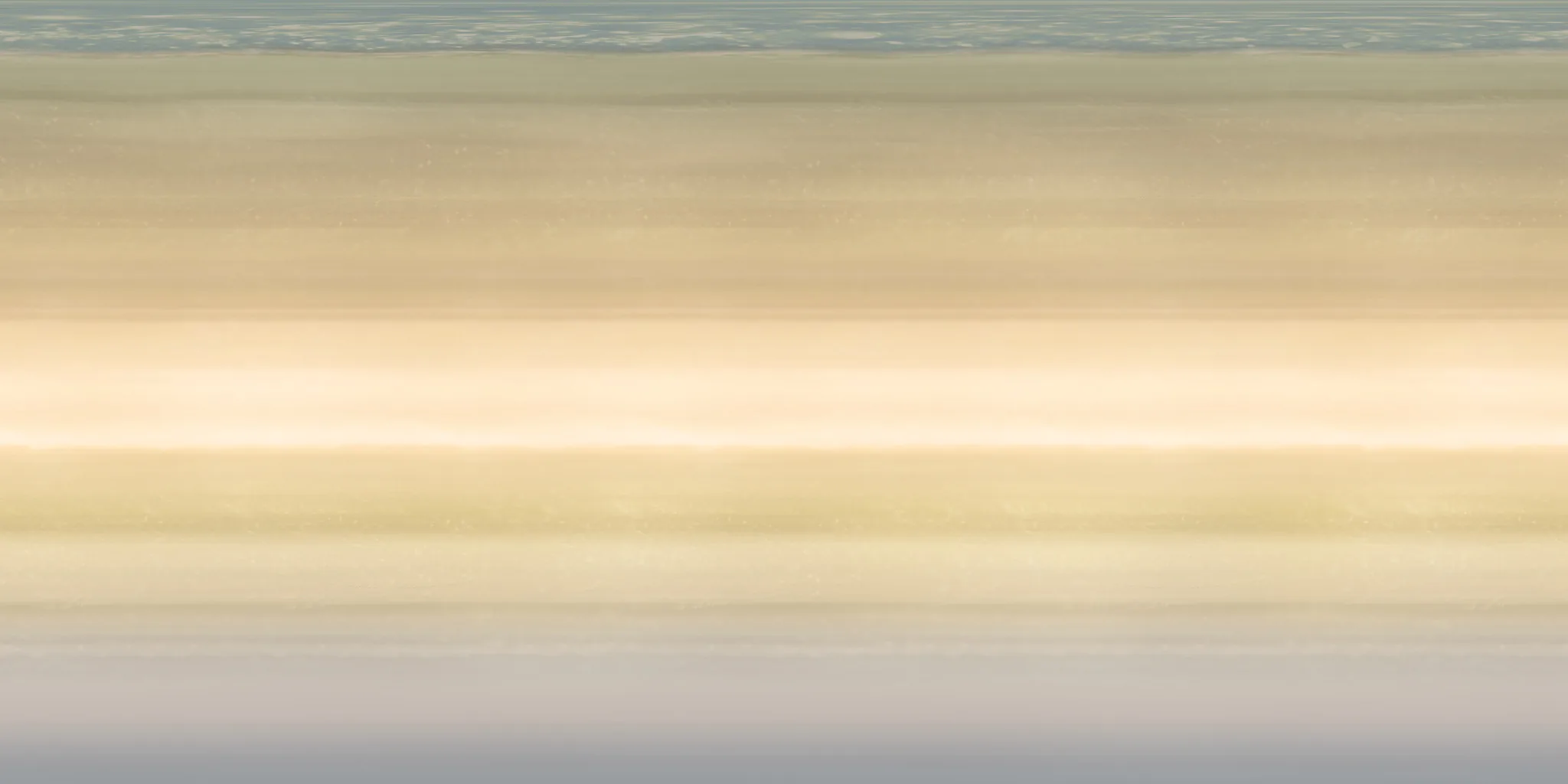
Saturn texture (2k_saturn.jpg)
Solar System Scope · Solar System Scope textures
Licence: CC BY 4.0
Saturn texture by Solar System Scope (www.solarsystemscope.com/textures), CC BY 4.0
What we changed: Converted to WebP at 2048 x 1024.
Note: Its maker says the colours in this set are slightly more saturated than in true-colour photos, and that gaps in the planets' mapping are filled with invented terrain that matches the rest.
The file we serve: phys-tex-saturn.webp, 2048 x 1024 pixels, 30 KB.
Saturn's rings, colour and alpha (2k_saturn_ring_alpha.png)
Solar System Scope · Solar System Scope textures
Licence: CC BY 4.0
Saturn's rings, colour and alpha by Solar System Scope (www.solarsystemscope.com/textures), CC BY 4.0
What we changed: Converted from PNG to lossless WebP, 2048 x 125, transparency kept: one strip across the rings.
Note: Its maker says the colours in this set are slightly more saturated than in true-colour photos, and that gaps in the planets' mapping are filled with invented terrain that matches the rest.
The file we serve: phys-tex-saturn-rings.webp, 2048 x 125 pixels, 8 KB.
Uranus texture (2k_uranus.jpg)
Solar System Scope · Solar System Scope textures
Licence: CC BY 4.0
Uranus texture by Solar System Scope (www.solarsystemscope.com/textures), CC BY 4.0
What we changed: Converted to WebP at 2048 x 1024.
Note: Its maker says the colours in this set are slightly more saturated than in true-colour photos, and that gaps in the planets' mapping are filled with invented terrain that matches the rest.
The file we serve: phys-tex-uranus.webp, 2048 x 1024 pixels, 8 KB.
Neptune texture (2k_neptune.jpg)
Solar System Scope · Solar System Scope textures
Licence: CC BY 4.0
Neptune texture by Solar System Scope (www.solarsystemscope.com/textures), CC BY 4.0
What we changed: Converted to WebP at 2048 x 1024.
Note: Its maker says the colours in this set are slightly more saturated than in true-colour photos, and that gaps in the planets' mapping are filled with invented terrain that matches the rest.
The file we serve: phys-tex-neptune.webp, 2048 x 1024 pixels, 15 KB.
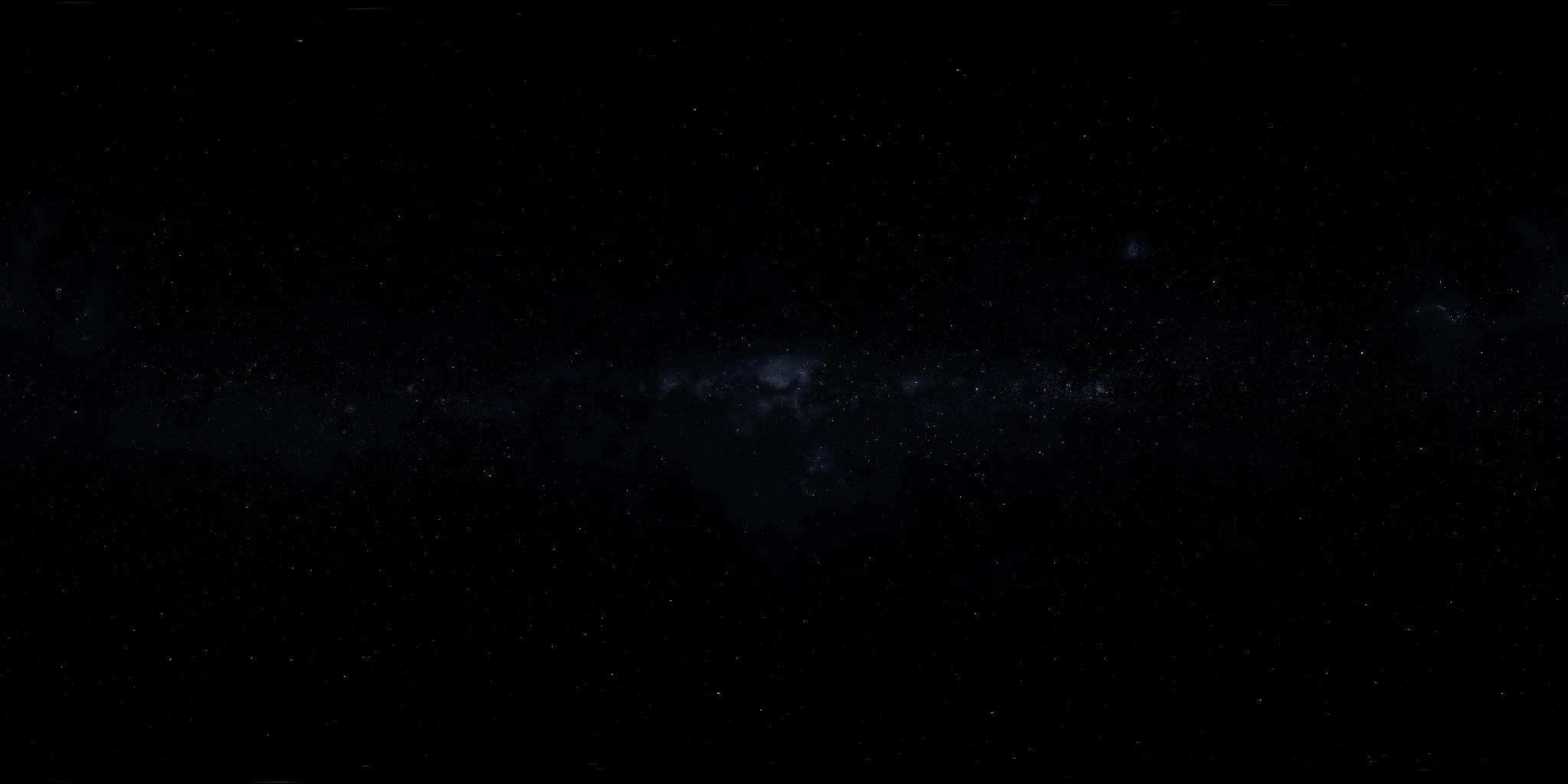
Stars and the Milky Way (2k_stars_milky_way.jpg)
Solar System Scope · Solar System Scope textures
Licence: CC BY 4.0
Stars and the Milky Way by Solar System Scope (www.solarsystemscope.com/textures), CC BY 4.0
What we changed: Converted to WebP at 2048 x 1024.
Note: Its maker says the colours in this set are slightly more saturated than in true-colour photos, and that gaps in the planets' mapping are filled with invented terrain that matches the rest.
The file we serve: phys-tex-milky-way.webp, 2048 x 1024 pixels, 42 KB.
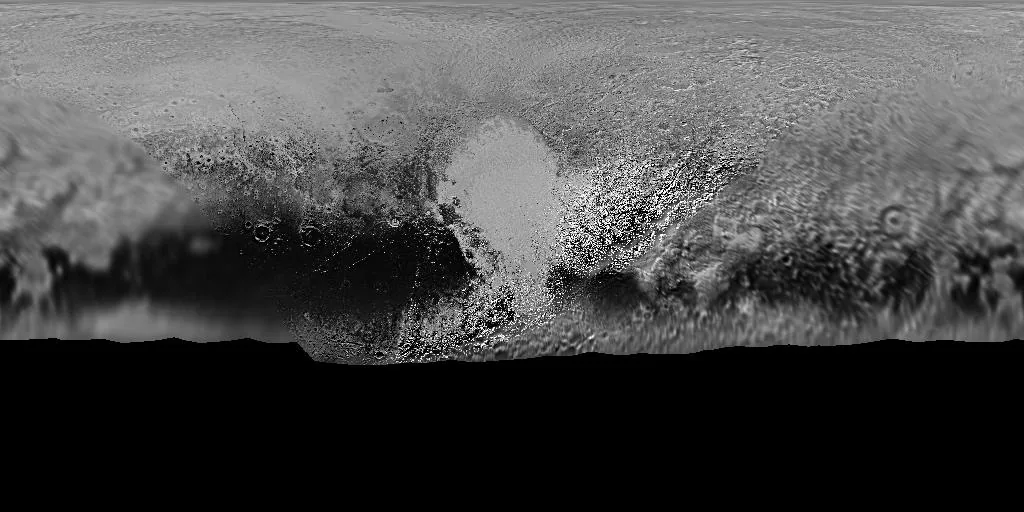
Pluto New Horizons LORRI - MVIC Global Mosaic 300m (1024-pixel browse image)
New Horizons Team (NASA, Johns Hopkins University Applied Physics Laboratory, Southwest Research Institute, Lunar and Planetary Institute) · USGS Astrogeology Science Center
Licence: Public domain
Pluto New Horizons LORRI - MVIC Global Mosaic 300m, New Horizons Team; NASA, JHU APL, SwRI and LPI; published by the USGS Astrogeology Science Center (2017).
What we changed: The 1024 x 512 browse JPEG converted to WebP. A greyscale mosaic: the south, which New Horizons could not see, is blank.
The file we serve: phys-tex-pluto.webp, 1024 x 512 pixels, 84 KB.
Geography
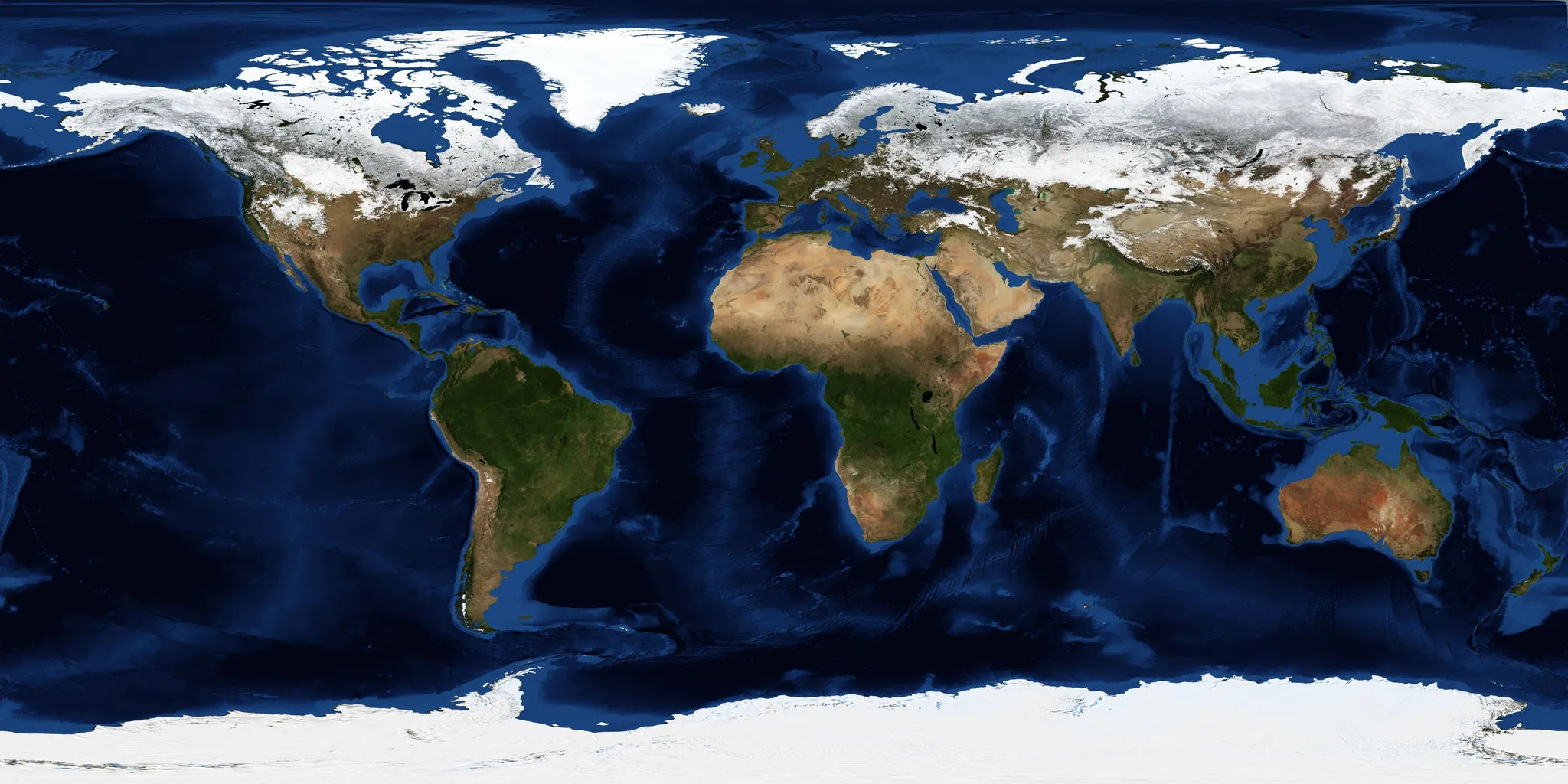
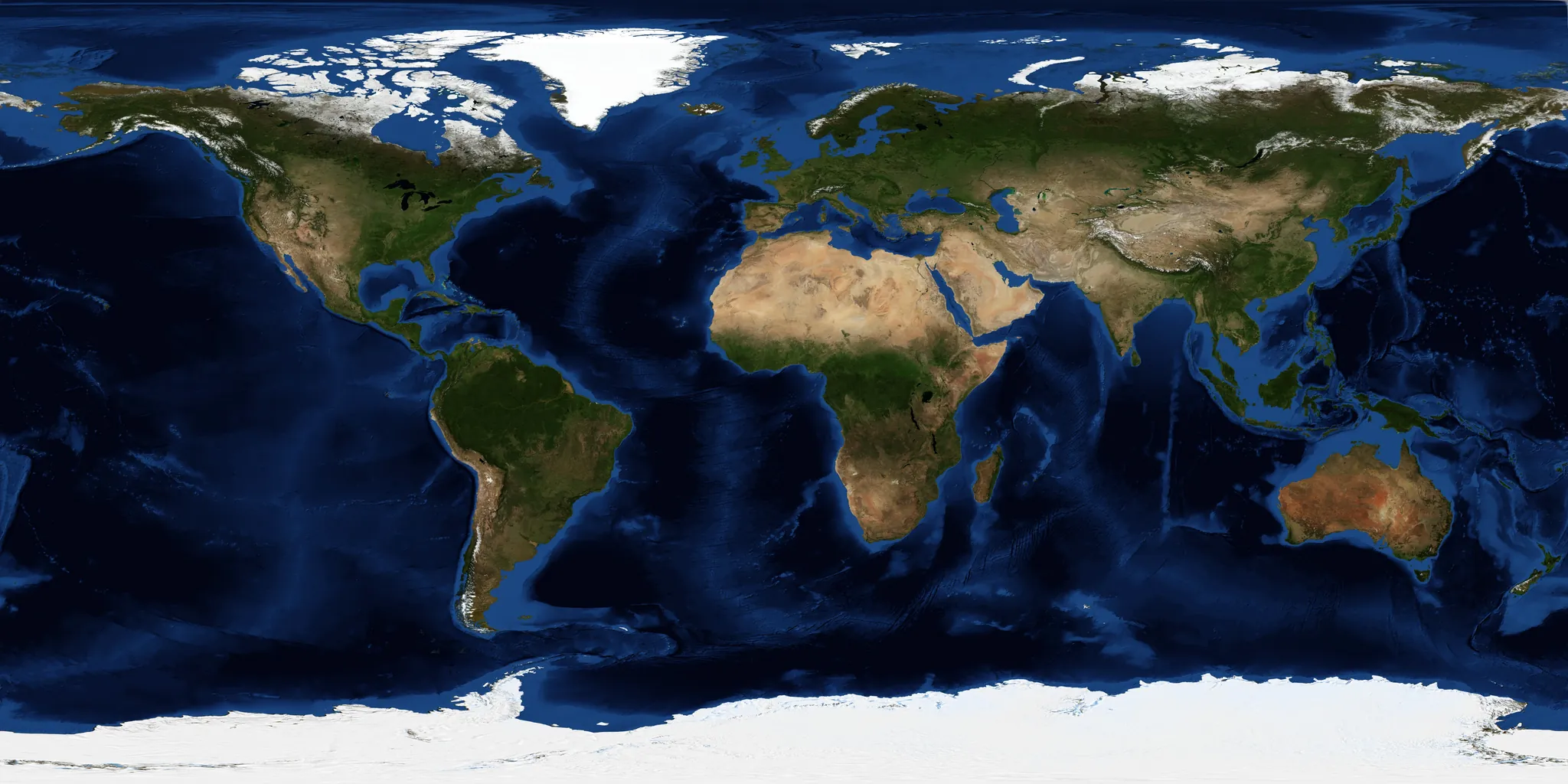
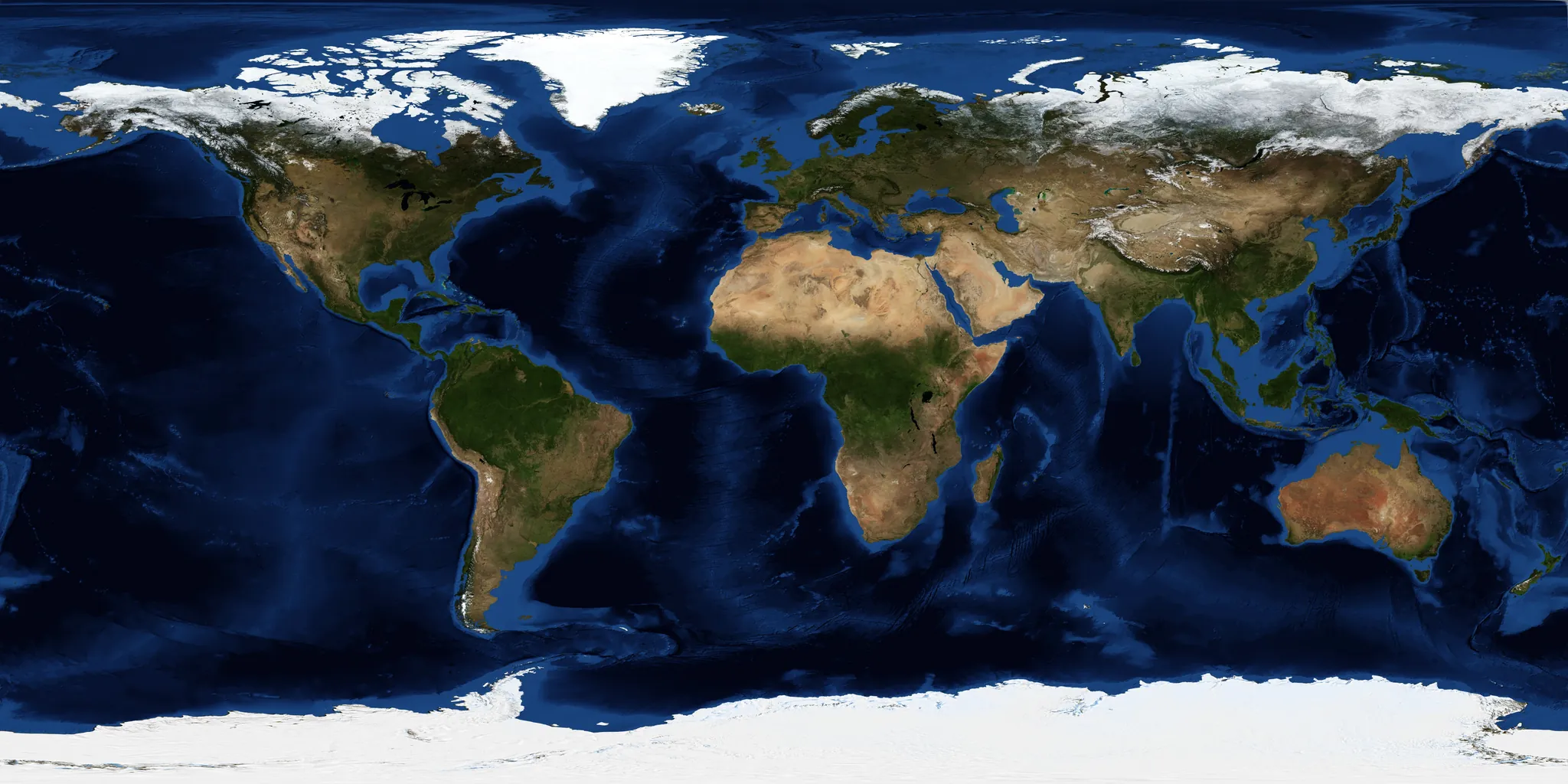
Blue Marble: Next Generation, topography and bathymetry, January 2004
Reto Stöckli, NASA Earth Observatory · NASA Earth Observatory
Licence: Public domain
NASA Earth Observatory, Blue Marble: Next Generation (images by Reto Stöckli)
What we changed: The 5400 x 2700 JPEG resized to 2048 x 1024 and converted to WebP (quality 80).
The file we serve: geo-blue-marble-01.webp, 2048 x 1024 pixels, 201 KB.
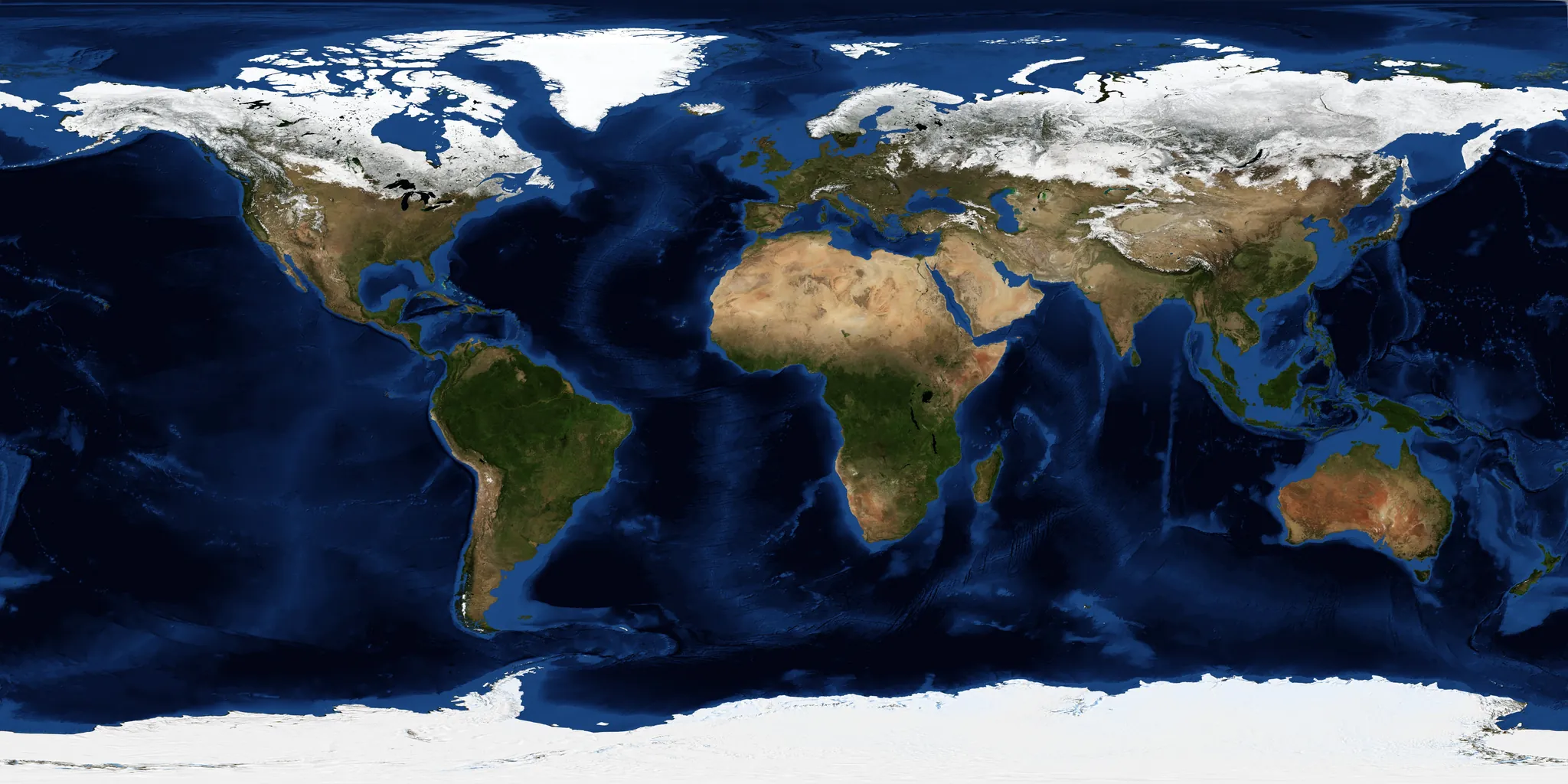
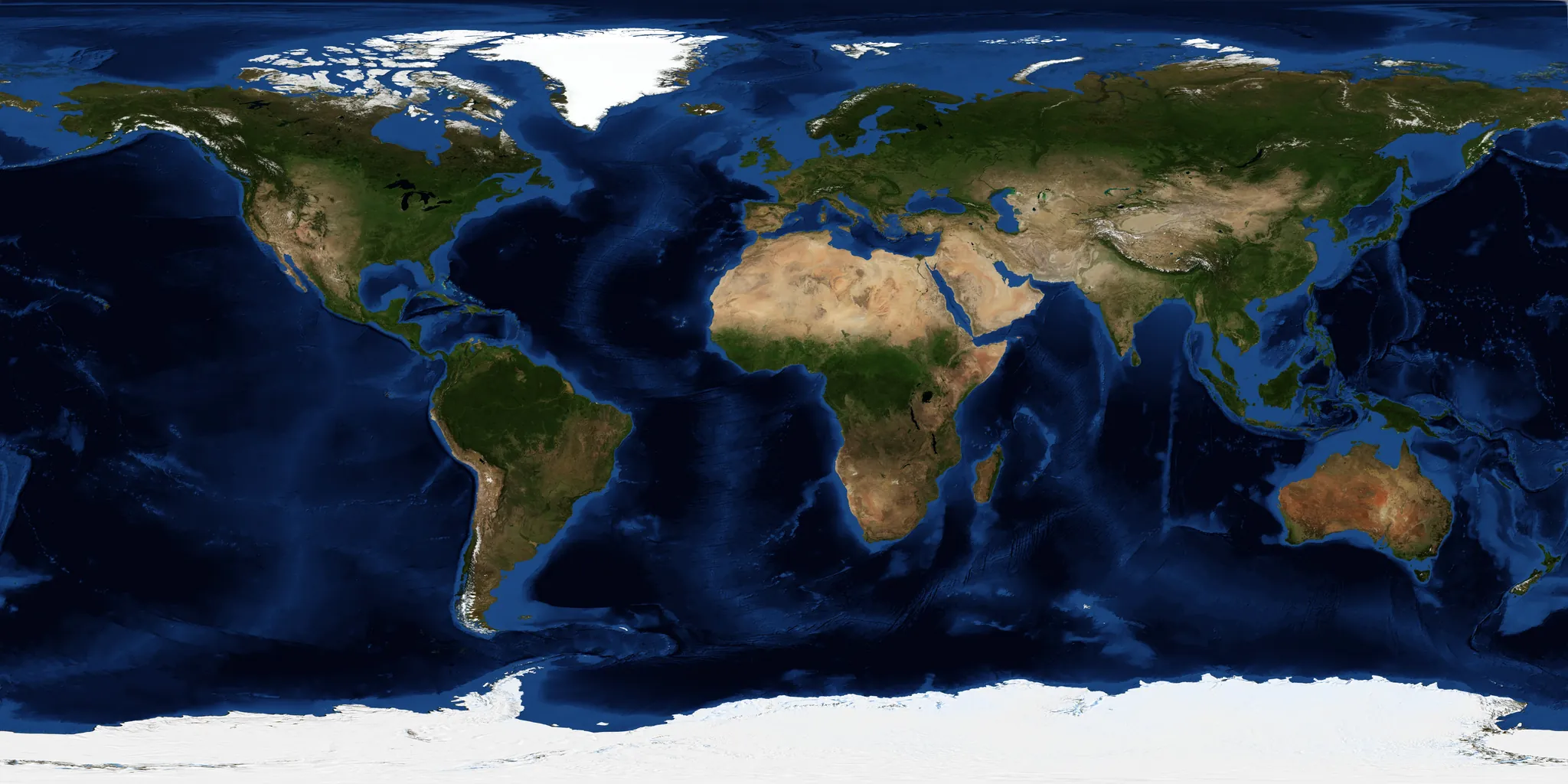
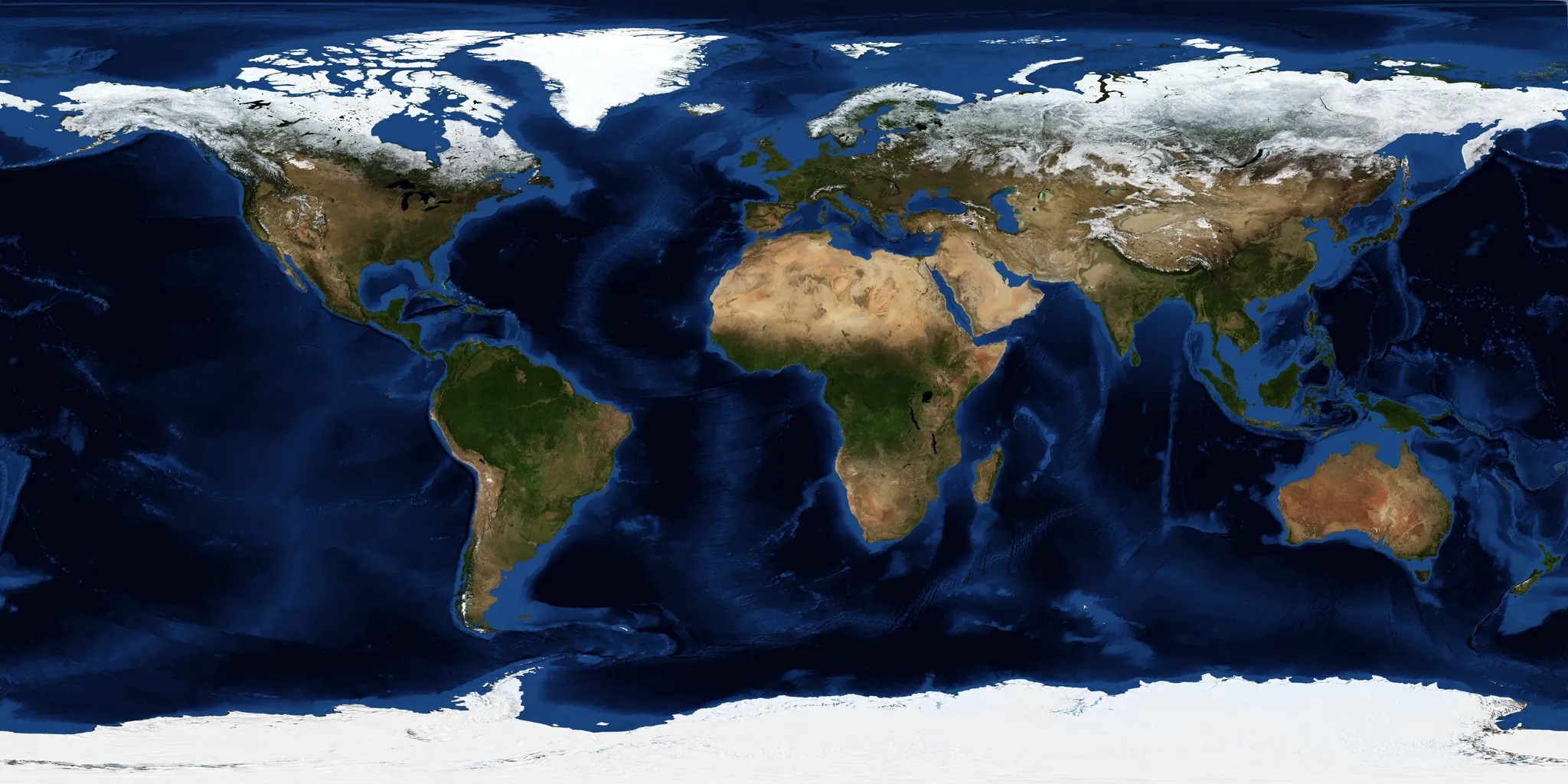
Blue Marble: Next Generation, topography and bathymetry, February 2004
Reto Stöckli, NASA Earth Observatory · NASA Earth Observatory
Licence: Public domain
NASA Earth Observatory, Blue Marble: Next Generation (images by Reto Stöckli)
What we changed: The 5400 x 2700 JPEG resized to 2048 x 1024 and converted to WebP (quality 80).
The file we serve: geo-blue-marble-02.webp, 2048 x 1024 pixels, 202 KB.
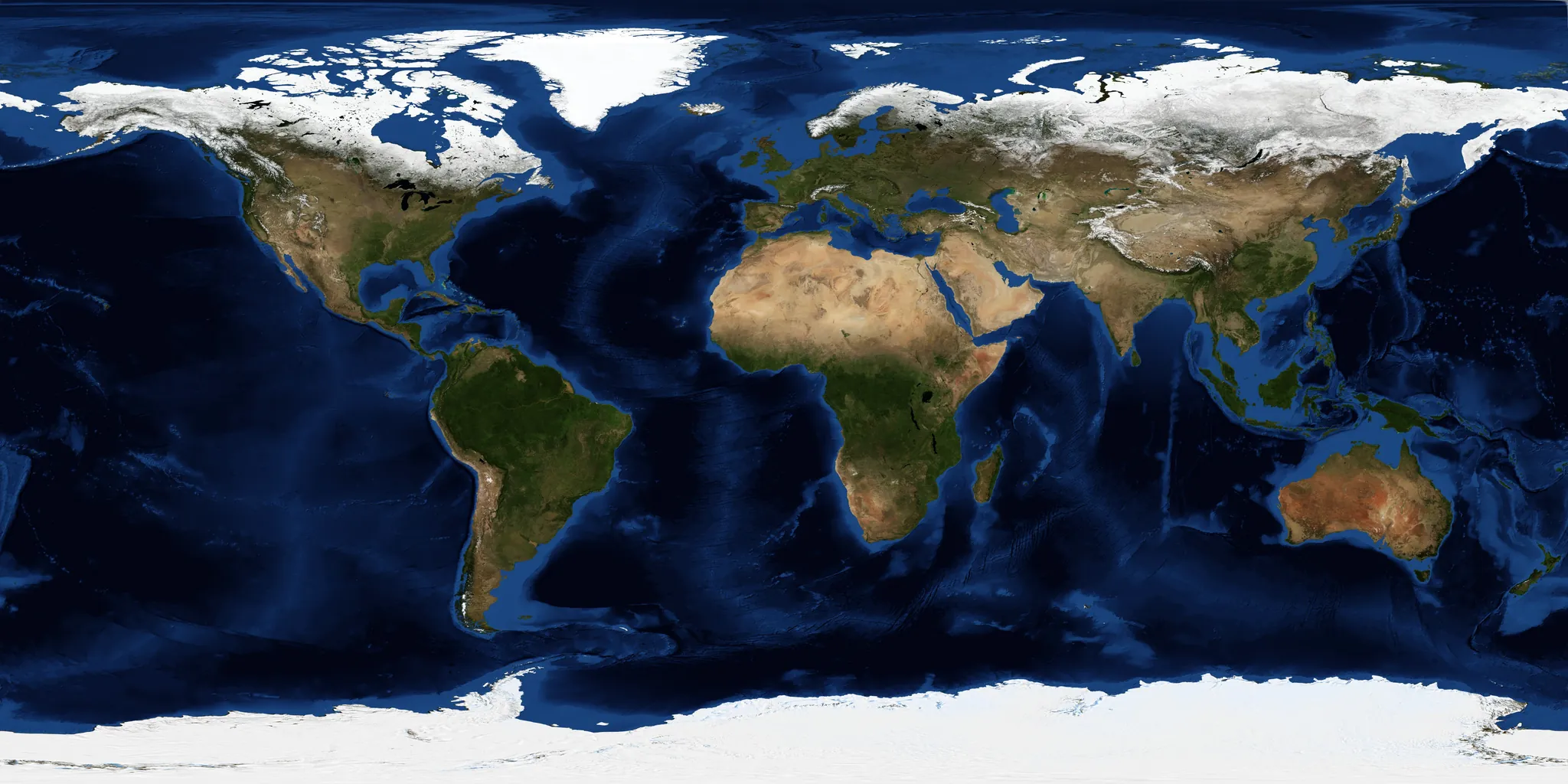
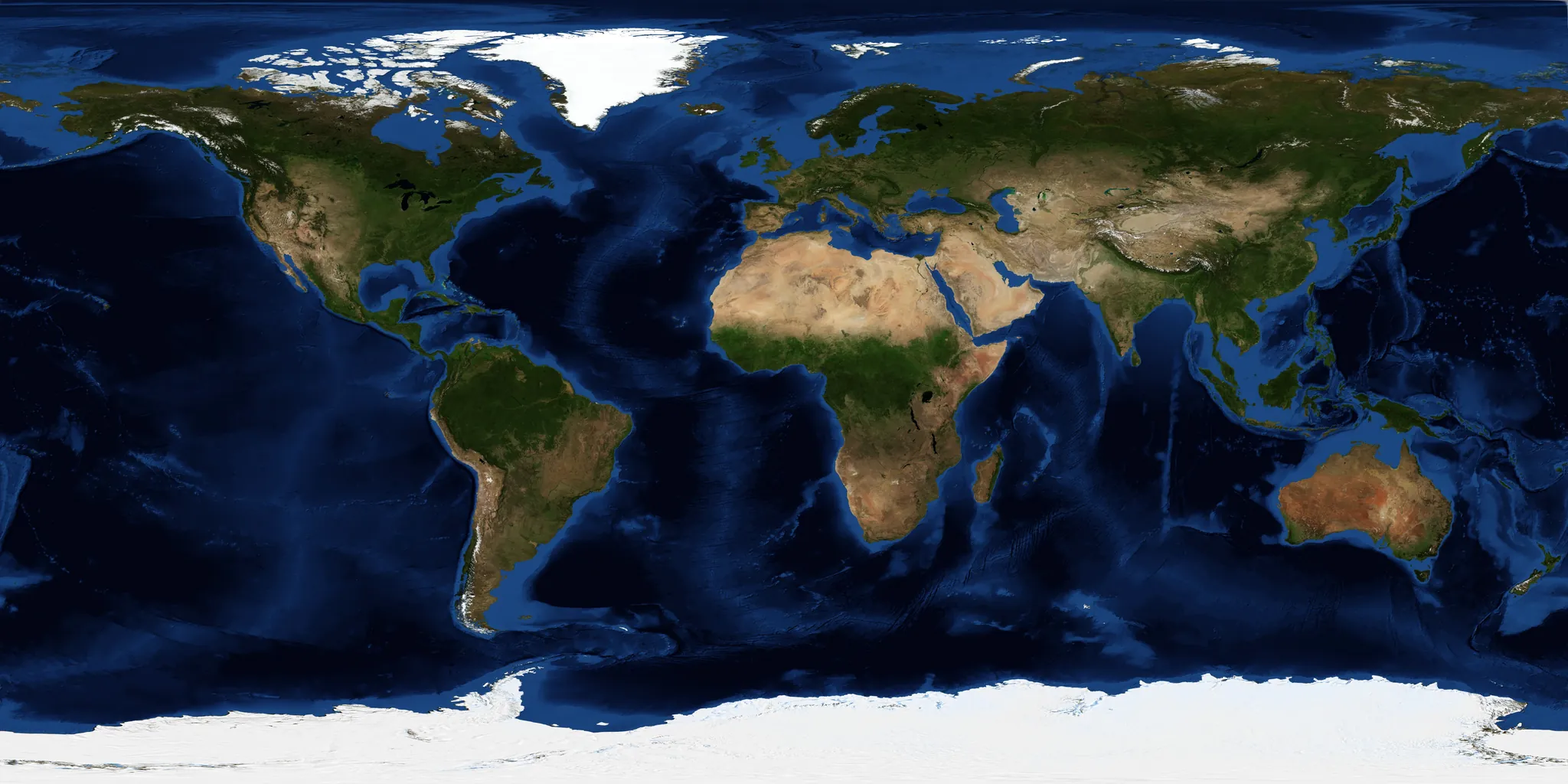
Blue Marble: Next Generation, topography and bathymetry, March 2004
Reto Stöckli, NASA Earth Observatory · NASA Earth Observatory
Licence: Public domain
NASA Earth Observatory, Blue Marble: Next Generation (images by Reto Stöckli)
What we changed: The 5400 x 2700 JPEG resized to 2048 x 1024 and converted to WebP (quality 80).
The file we serve: geo-blue-marble-03.webp, 2048 x 1024 pixels, 197 KB.
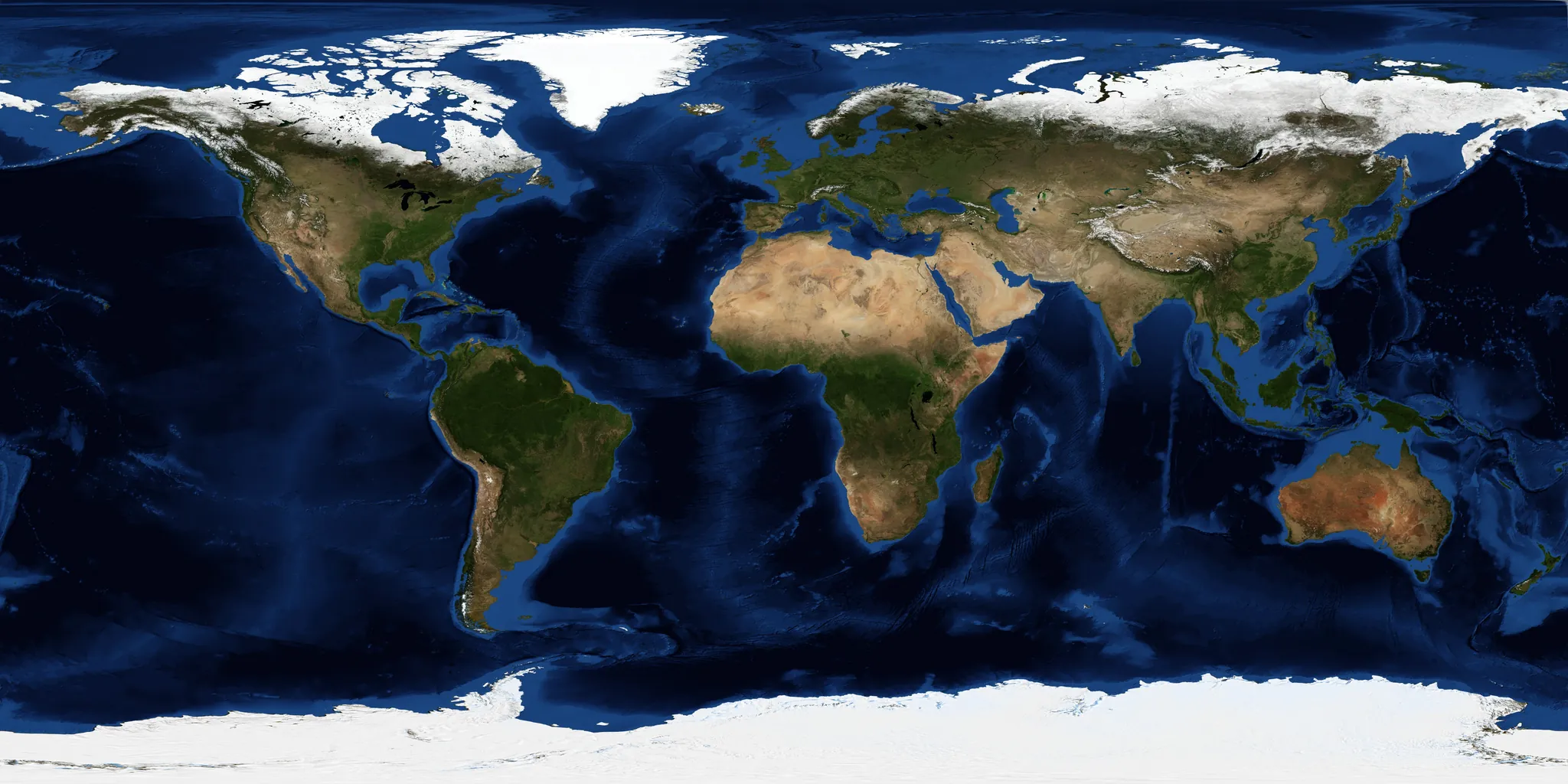
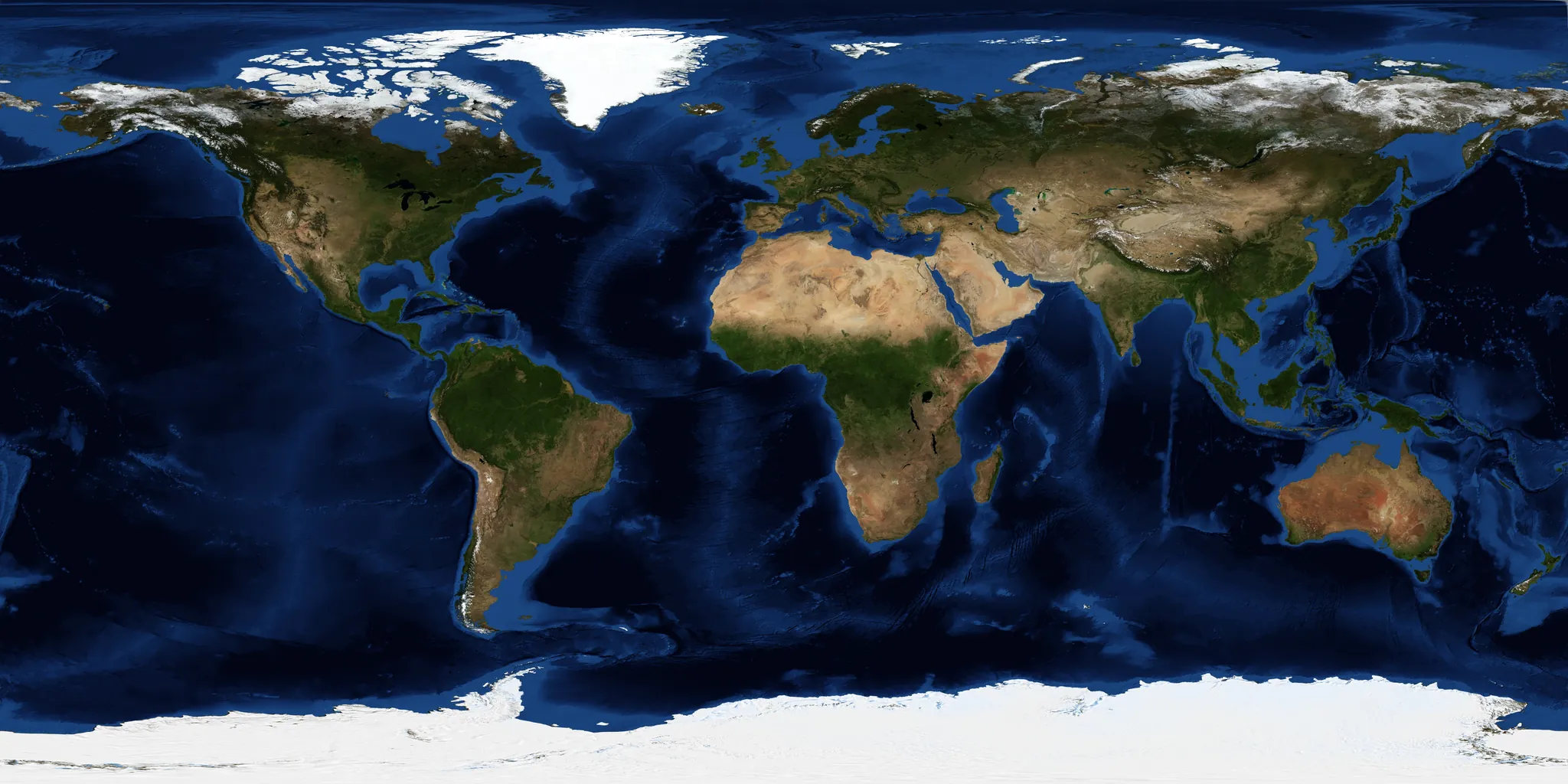
Blue Marble: Next Generation, topography and bathymetry, April 2004
Reto Stöckli, NASA Earth Observatory · NASA Earth Observatory
Licence: Public domain
NASA Earth Observatory, Blue Marble: Next Generation (images by Reto Stöckli)
What we changed: The 5400 x 2700 JPEG resized to 2048 x 1024 and converted to WebP (quality 80).
The file we serve: geo-blue-marble-04.webp, 2048 x 1024 pixels, 191 KB.
Blue Marble: Next Generation, topography and bathymetry, May 2004
Reto Stöckli, NASA Earth Observatory · NASA Earth Observatory
Licence: Public domain
NASA Earth Observatory, Blue Marble: Next Generation (images by Reto Stöckli)
What we changed: The 5400 x 2700 JPEG resized to 2048 x 1024 and converted to WebP (quality 80).
The file we serve: geo-blue-marble-05.webp, 2048 x 1024 pixels, 187 KB.
Blue Marble: Next Generation, topography and bathymetry, June 2004
Reto Stöckli, NASA Earth Observatory · NASA Earth Observatory
Licence: Public domain
NASA Earth Observatory, Blue Marble: Next Generation (images by Reto Stöckli)
What we changed: The 5400 x 2700 JPEG resized to 2048 x 1024 and converted to WebP (quality 80).
The file we serve: geo-blue-marble-06.webp, 2048 x 1024 pixels, 177 KB.
Blue Marble: Next Generation, topography and bathymetry, July 2004
Reto Stöckli, NASA Earth Observatory · NASA Earth Observatory
Licence: Public domain
NASA Earth Observatory, Blue Marble: Next Generation (images by Reto Stöckli)
What we changed: The 5400 x 2700 JPEG resized to 2048 x 1024 and converted to WebP (quality 80).
The file we serve: geo-blue-marble-07.webp, 2048 x 1024 pixels, 168 KB.
Blue Marble: Next Generation, topography and bathymetry, August 2004
Reto Stöckli, NASA Earth Observatory · NASA Earth Observatory
Licence: Public domain
NASA Earth Observatory, Blue Marble: Next Generation (images by Reto Stöckli)
What we changed: The 5400 x 2700 JPEG resized to 2048 x 1024 and converted to WebP (quality 80).
The file we serve: geo-blue-marble-08.webp, 2048 x 1024 pixels, 167 KB.
Blue Marble: Next Generation, topography and bathymetry, September 2004
Reto Stöckli, NASA Earth Observatory · NASA Earth Observatory
Licence: Public domain
NASA Earth Observatory, Blue Marble: Next Generation (images by Reto Stöckli)
What we changed: The 5400 x 2700 JPEG resized to 2048 x 1024 and converted to WebP (quality 80).
The file we serve: geo-blue-marble-09.webp, 2048 x 1024 pixels, 181 KB.
Blue Marble: Next Generation, topography and bathymetry, October 2004
Reto Stöckli, NASA Earth Observatory · NASA Earth Observatory
Licence: Public domain
NASA Earth Observatory, Blue Marble: Next Generation (images by Reto Stöckli)
What we changed: The 5400 x 2700 JPEG resized to 2048 x 1024 and converted to WebP (quality 80).
The file we serve: geo-blue-marble-10.webp, 2048 x 1024 pixels, 188 KB.
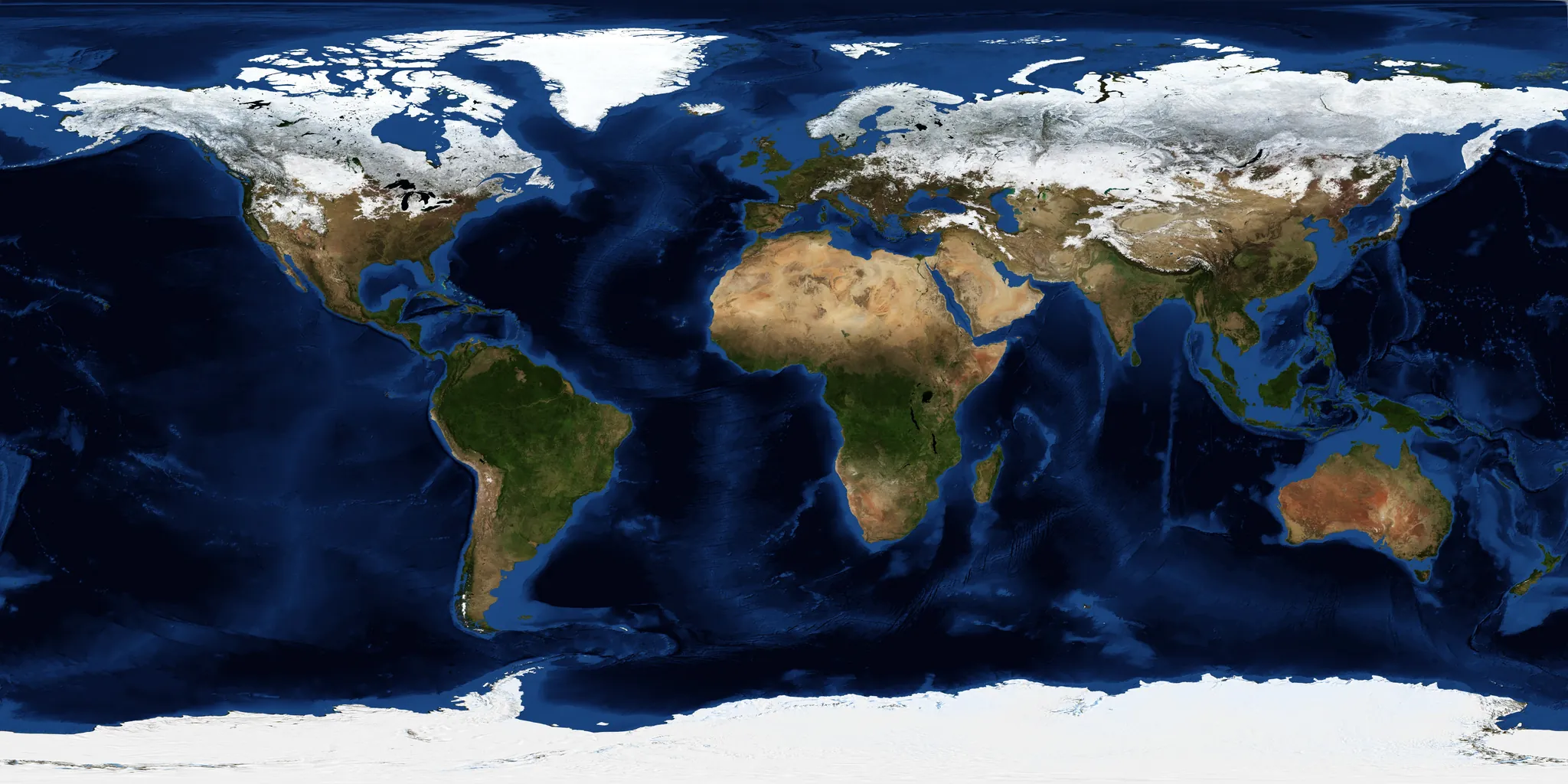
Blue Marble: Next Generation, topography and bathymetry, November 2004
Reto Stöckli, NASA Earth Observatory · NASA Earth Observatory
Licence: Public domain
NASA Earth Observatory, Blue Marble: Next Generation (images by Reto Stöckli)
What we changed: The 5400 x 2700 JPEG resized to 2048 x 1024 and converted to WebP (quality 80).
The file we serve: geo-blue-marble-11.webp, 2048 x 1024 pixels, 197 KB.